Kimbap After KPop Demon Hunters: A Beginner-Friendly Recipe for Two
By Korean ESY · Editorial standards
September 19, 2026
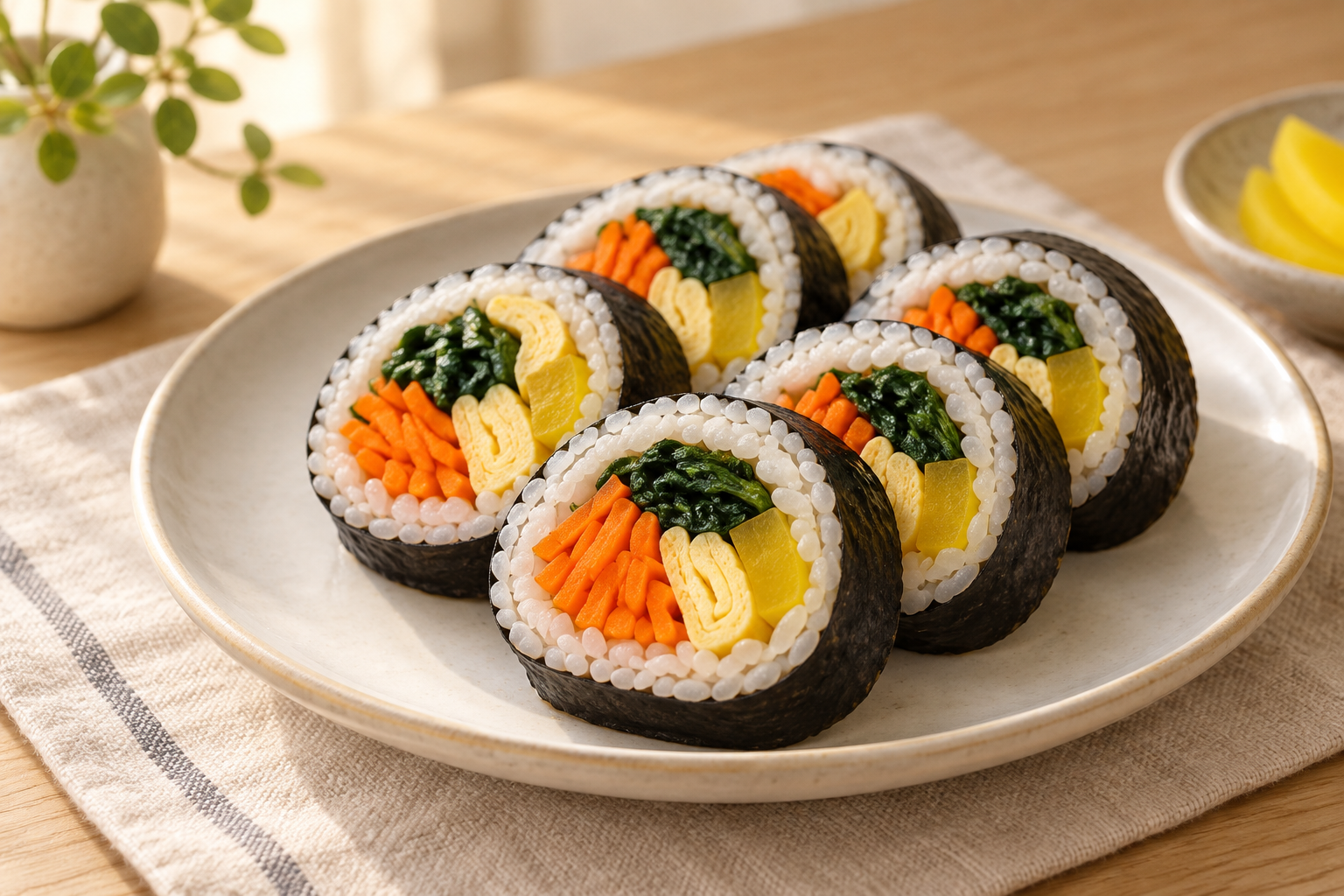
Jump to recipe and ingredients · Go to illustrated steps
If KPop Demon Hunters made you curious about the seaweed rice rolls on screen, you were looking at kimbap, also spelled gimbap: 김밥. Netflix’s official food guide, dated December 5, 2025, identifies kimbap in the film’s food scenes. That is our starting point for this recipe—not a claim that kimbap is newly viral this week. Netflix Tudum food guide
This small-batch version uses egg, carrot, spinach, and pickled radish. It is an approachable variation, not a replica of the film’s exact filling. The rice and rolling methods draw on the original guides by Hyosun at Korean Bapsang and Maangchi, with a simplified filling mix and quantities selected for two rolls.
Recipe note: This is a source-based editorial adaptation, not a recipe kitchen-tested by KoreanESY. The times are estimates; use the texture and doneness cues. The shopping panel is a dated price snapshot, with unconfirmed details identified.
What you are making
- Yield: two full-size rolls, approximately 8–10 slices each; one roll per person as a light meal.
- Planning time: about 35–45 minutes with cooked rice ready. Cooking rice from dry adds the time on your rice package or cooker program.
- Equipment: kitchen scale, US measuring spoons, saucepan, colander, 8–10-inch nonstick skillet, spatula, mixing bowl, cutting board, and sharp knife. A bamboo rolling mat is helpful.
- Flavor: sesame-seasoned rice, mild vegetables, egg, and a sweet-salty crunch from the radish. No chili sauce is required.
Ingredients for two
Weights are the working recipe measure; cup measures are approximate. A US cup is not the smaller cup supplied with many rice cookers.
| Ingredient | Amount for this recipe | Buying note |
|---|---|---|
| Cooked short- or medium-grain white rice | 400 g, approximately 2 US cups | Plain rice; buy dry rice or plain cooked rice, not a seasoned rice mix |
| Roasted seaweed for rolling | 2 full-size sheets | Look for kimbap gim or sushi nori, not small salted snack sheets |
| Large eggs | 2 | Keep refrigerated until needed |
| Carrot | 80 g, peeled | About one small carrot; weigh after trimming |
| Fresh spinach | 100 g | Wash and remove tough ends |
| Danmuji, Korean pickled radish | 2 long strips, approximately 50 g drained | Buy pre-cut kimbap strips or cut a whole piece to the sheet’s width |
| Toasted sesame oil | 2 tsp / 10 mL | 1½ tsp for rice, ¼ tsp for spinach, ¼ tsp for the outside |
| Neutral cooking oil | 2 tsp / 10 mL | 1 tsp for carrot and 1 tsp for egg |
| Fine salt | ¼ tsp total | ⅛ tsp for rice; divide the remaining ⅛ tsp between carrot and egg |
For a dry-rice shopping estimate, allow approximately 150 g dry rice to prepare the needed cooked amount, but measure the cooked rice you actually obtain. Water absorption and yield vary. Follow the package’s water and cooking directions rather than treating a dry-to-cooked estimate as an exact conversion.
About the images: All seven images below and above are AI-generated explanations. They illustrate ingredient states and technique; they are not measured portions, real product photos, or photographs of a cooking test. Follow the written quantities and food-safety guidance.
Six steps, with a cue to check at each stage
1. Set up the rice and vegetables
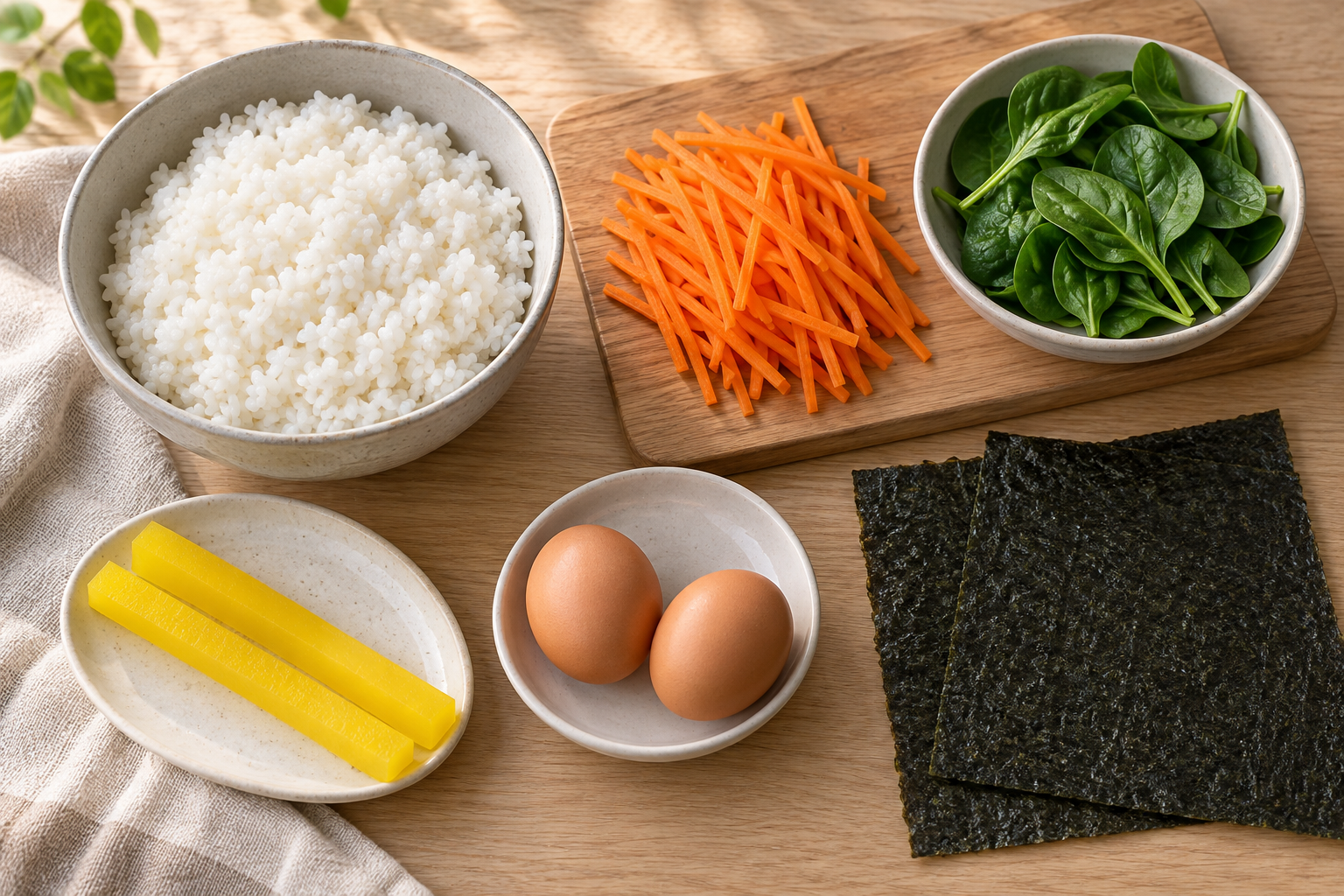
Cook rice according to its package or cooker instructions if needed. Keep it warm while preparing the fillings. Cut carrot into thin matchsticks, roughly 2–3 mm thick. Drain and blot the radish. Divide the fillings into two portions before rolling so the second roll is not left with a different mix.
Look for: flexible, slightly sticky rice with distinct grains, and vegetable pieces that will lie flat. If the rice is wet enough to pool liquid, do not use it for rolling.
2. Cook and dry the vegetables
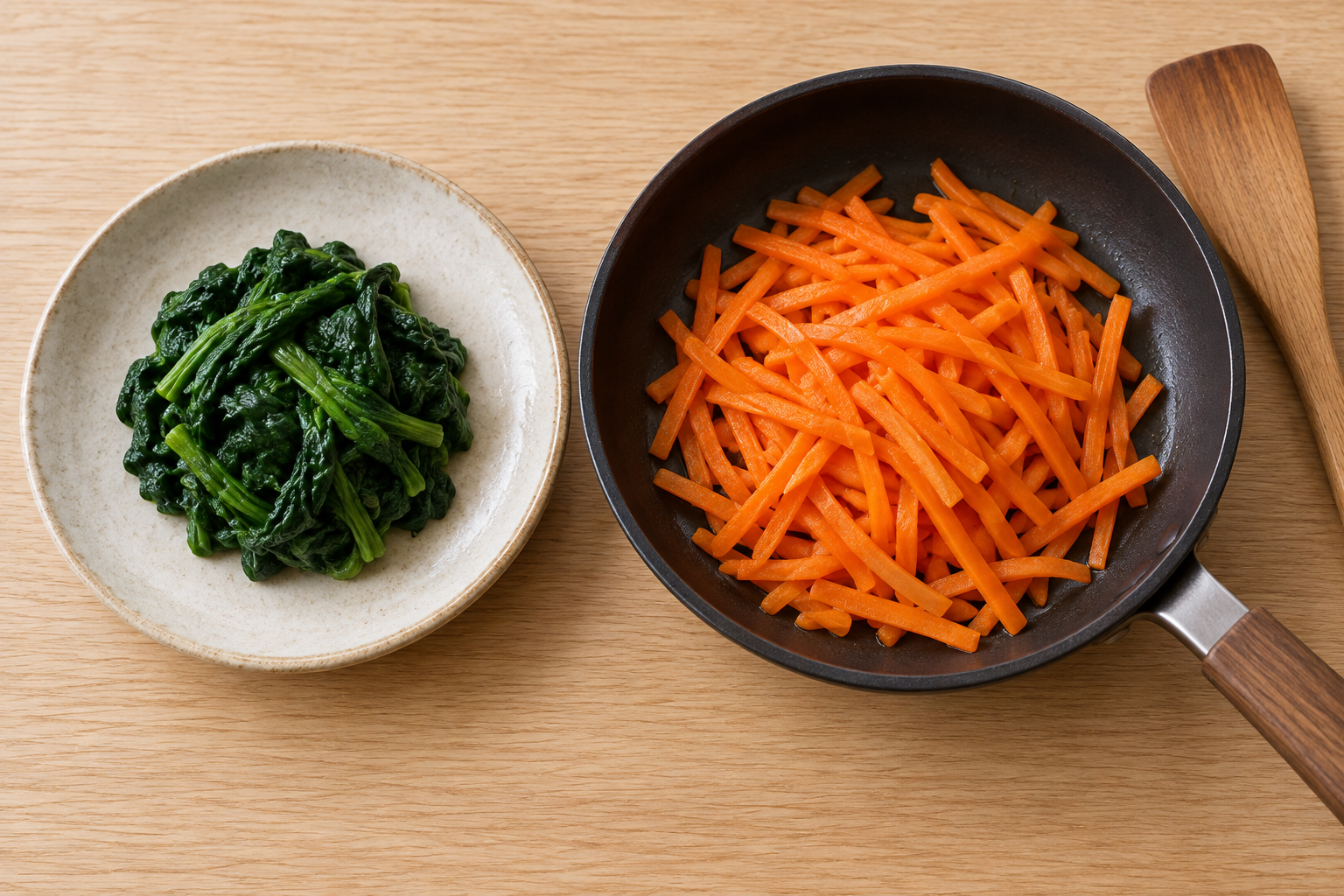
Bring a saucepan of water to a boil over high heat. Add spinach for approximately 30–60 seconds, just until wilted; drain, rinse under cold water, and squeeze firmly. Mix with ¼ tsp sesame oil. In the skillet, heat 1 tsp neutral oil over medium heat; stir the carrot with its salt portion for about 2–3 minutes, until it bends but still has some bite. Transfer it to a plate.
Look for: spinach that leaves no puddle when squeezed and carrot that is pliable, not browned. These are timing estimates for this adaptation, not measured test results.
3. Make a fully cooked egg sheet
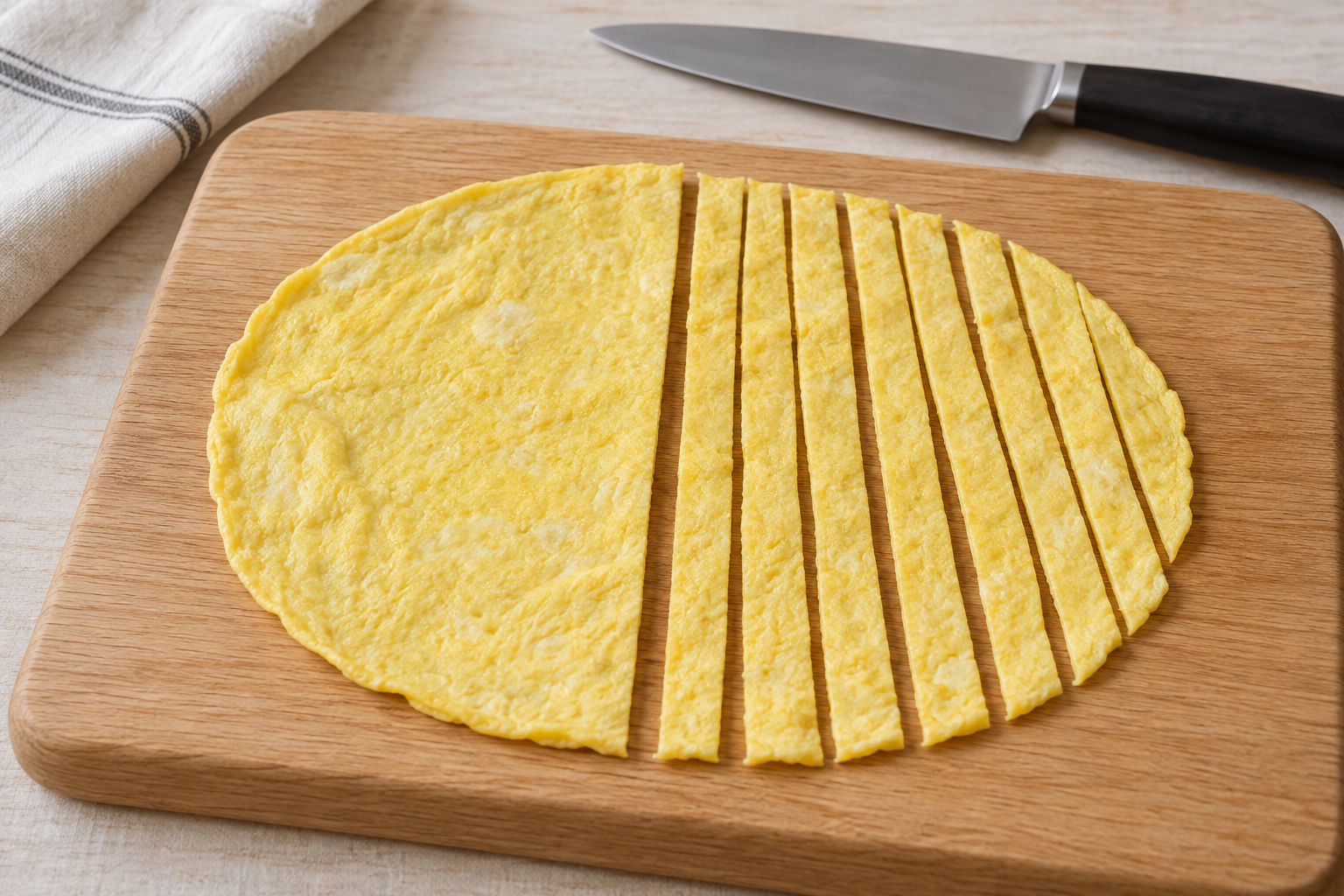
Beat the eggs with their salt portion. Add the remaining 1 tsp neutral oil to the skillet over medium-low heat and pour in the eggs. Cook about 2–3 minutes until the base holds together, flip carefully, and cook the other side for roughly 30–60 seconds or longer as needed. Both sides must be set with no liquid egg. Transfer to a clean board and cut into roughly ½-inch-wide strips.
Look for: a flexible yellow sheet, not a runny center. FDA advises cooking eggs thoroughly; visual timing alone should not override doneness. FDA egg safety
4. Season and spread
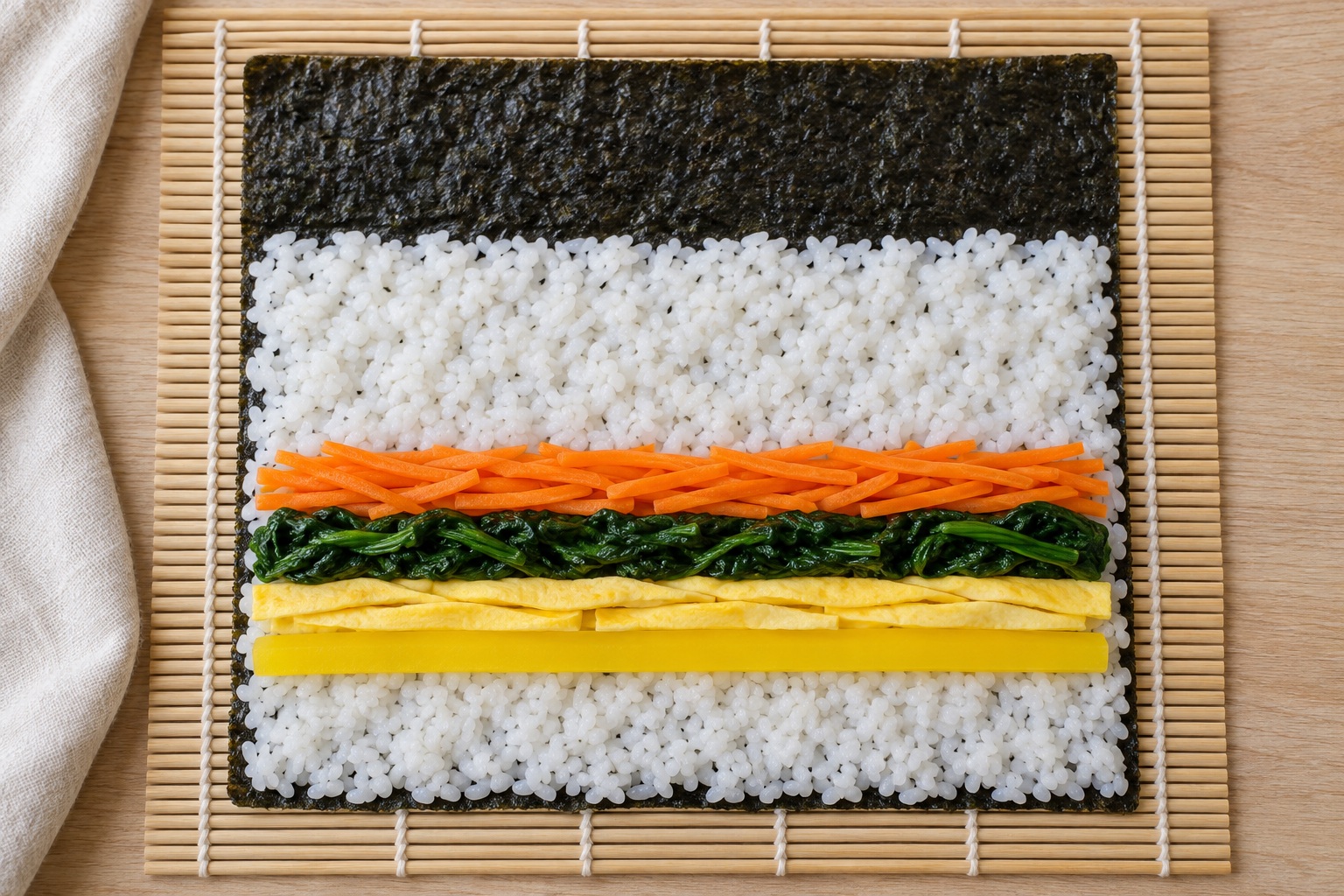
Fold 1½ tsp sesame oil and ⅛ tsp salt into the warm rice. Let heavy steam subside briefly. Place one seaweed sheet shiny-side down on the mat. Spread half the rice in an even layer, leaving a 1½–2-inch bare strip along the far edge. Arrange half the fillings in a compact line across the lower-middle area.
Look for: an unbroken rice layer and a clear sealing strip. If the filling forms a tall mound, set some aside to eat alongside the rolls rather than forcing it inside.
5. Close the roll
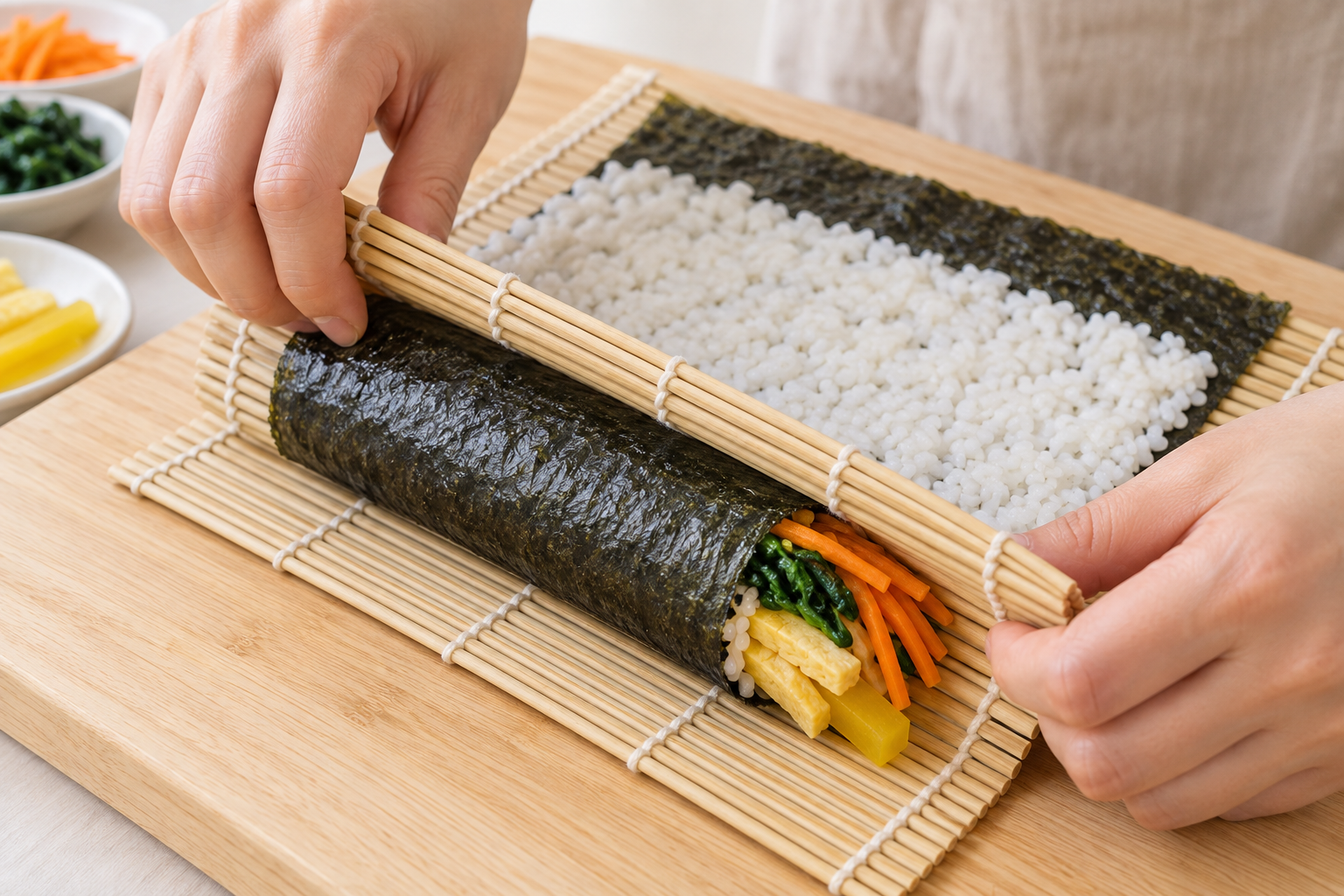
Lift the edge nearest you and tuck it over the filling. Roll away from you with gentle, even pressure, pulling the mat outward so it does not become trapped. Finish with the seam underneath. Repeat with the second sheet. Brush both rolls sparingly with the reserved ¼ tsp sesame oil.
Look for: a closed seam and a cylinder that holds its shape without being crushed. An untidy end is fine.
6. Slice and serve
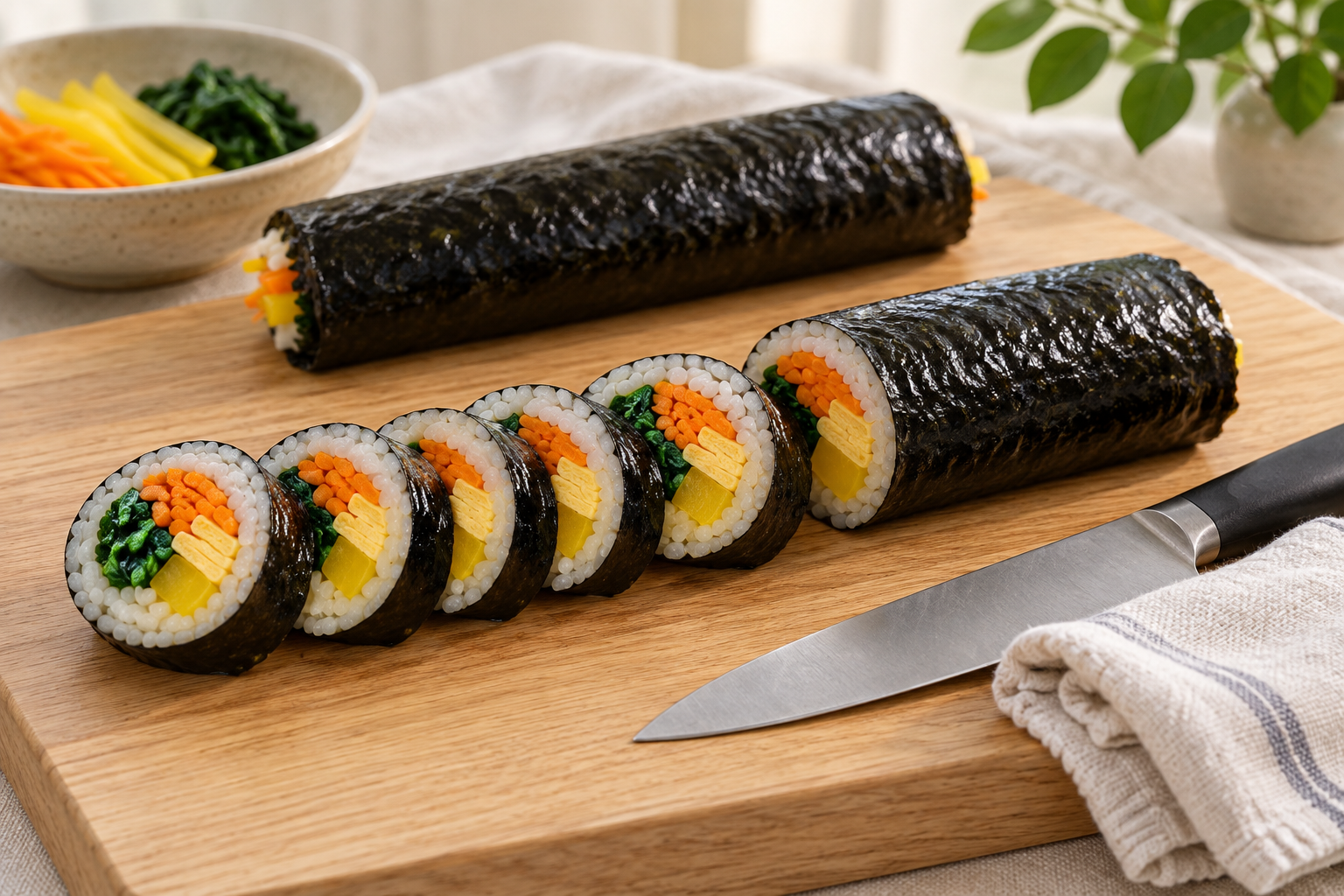
With a sharp knife, cut each roll into 8–10 pieces, roughly ¾ inch thick depending on sheet size. Wipe starch from the blade with a clean damp towel between cuts. Use a controlled slicing motion rather than pressing straight down.
Look for: visible orange, yellow, and green fillings surrounded by rice, with the seaweed holding each piece together. Serve promptly.
If the first roll misbehaves
| What happened | What to change |
|---|---|
| The sheet tears as you roll | Reduce the filling height for the next roll; check that wet vegetables were squeezed or blotted |
| Rice sticks to your fingers | Lightly dampen your fingertips; do not soak the seaweed |
| Slices collapse under the knife | Wipe the blade, use a sharper knife, and slice gently while supporting the roll |
| You cannot close the roll neatly | Serve the ingredients as a rice bowl; the first attempt still becomes lunch |
Substitutions and allergy notes
Instead of spinach: use 100 g cucumber cut into narrow sticks, removing a watery seed center and blotting dry. Use it in place of spinach, not in addition to it, for the same manageable filling volume.
Without egg: omit it and keep the smaller roll, or choose a separate, verified tofu-kimbap recipe. This egg version is not vegan. Without sesame: use an oil that is safe for your needs and omit the sesame coating; the flavor changes. These variations have not been tested here.
This recipe contains egg and sesame. Check every packaged ingredient and any cross-contact warnings; adding fish cake, imitation crab, sauces, or tofu changes the ingredient and allergen profile. Do not assume a packaged filling is gluten-free or vegetarian from its appearance.
Storage: plan for one meal
Refrigerate extras promptly at 40°F / 4°C or below. Do not leave egg-containing food unrefrigerated for more than 2 hours, or 1 hour above 90°F / 32°C; include preparation and serving time. Discard food that exceeds those limits. FDA advises reheating refrigerated egg dishes thoroughly to 165°F / 74°C. FDA egg safety
For this recipe, our practical quality recommendation is to eat it the day it is made and refrigerate any extra for the next day. That is a conservative meal-planning choice, not a tested shelf-life claim. Refrigerated rice firms up, so the texture will change; do not leave the rolls on the counter to soften. Use a covered microwave-safe dish and check the center temperature when reheating.
U.S. shopping and Los Angeles examples
These are HMart.com online prices observed September 18, 2026, between 5:05 and 5:11 p.m. Pacific, with example delivery ZIP 90005 selected. They are not LA shelf prices or prices guaranteed across the United States. Shipping, fees, tax, and delivery availability are not included or confirmed.
| Pantry item | Observed package price | Check before buying |
|---|---|---|
| Nishiki Premium Grade Rice, 15 lb / 6.8 kg | $15.79 | Medium-grain rice; Weekly Sale label, with no displayed end date |
| Chung Jung One Gimbap Gim, 20 sheets / 40 g | $5.99 | Shown in regional search suggestions; its direct product page was unavailable. Search the exact name and confirm the label and current availability before buying |
| Kadoya Pure Sesame Oil, 325 mL | $6.99 | The manufacturer confirms roasted sesame seeds for its Pure Sesame Oil; choose Pure rather than Hot Sesame Oil and recheck the bottle label |
| Jinga Kimbap Pickled Radish, 400 g | $2.49 | Refrigerated; the usable drained weight was not confirmed |
The four packages above cost $31.26 together at this snapshot. This is only a pantry-package subtotal: it excludes eggs, carrot, spinach, neutral oil, salt, tax, shipping and fees. Buying a package and using part of it are different costs.
| Portion used | Cost of that portion at the snapshot price | Limit |
|---|---|---|
| 2 sheets from the 20-sheet pack | About $0.60 | Seaweed only |
| 10 mL from the 325 mL sesame oil bottle | About $0.22 | Sesame oil only |
| 150 g dry rice from the 6.8 kg bag | About $0.35 | A dry-rice shopping assumption; not a verified cost for 400 g cooked rice |
| 50 g drained radish | Not verified | Drained yield of the 400 g pack is unknown |
The complete recipe and per-person costs are not yet verified. Do not treat either the pantry subtotal or these portion costs as the cost of a serving.
For an LA store example, H Mart LA K-Town lists 928 S Western Ave, Los Angeles, CA 90006, with daily hours of 9 a.m.–9 p.m. as checked on September 16. Recheck before visiting; this does not confirm these products are in stock there.
For the first shopping trip, prioritize the correct rice and full-size seaweed. Vegetables and eggs can be bought separately; there is no need to purchase meat, gochujang, or an entire kimbap kit for this version. If you shop elsewhere in the U.S., match the ingredient specifications and compare your store’s current package sizes and prices.
Egg, carrot, spinach, neutral-oil, and salt prices have not been verified here, so this is a partial pantry-price guide. Recheck current prices and the product labels before buying; no complete shopping bill or per-serving total is claimed.
One Korean phrase for the kitchen
김밥 두 줄 주세요. — Gimbap du jul juseyo. — Two rolls of kimbap, please. Here, 줄 counts whole rolls. This is an original teaching example, not a line from the film. At home, try saying 제가 만들었어요 — Jega mandeureosseoyo — I made it when you bring the plate to the table.
References
Recipe and safety sources checked September 16, 2026; Netflix food context rechecked September 18. FDA safety guidance and the shopping examples were rechecked September 18; the example ZIP was 90005. Recipe wording, small-batch planning, and troubleshooting layout are KoreanESY’s editorial adaptation; the authors’ photographs and text have not been licensed or copied into this draft.
- Netflix Tudum — All the Food in KPop Demon Hunters, Olivia Harrison, December 5, 2025: documented film-food context.
- Korean Bapsang — Kimbap (Seaweed Rice Rolls), Hyosun: classic ingredients, rice quantities, and preparation guidance.
- Maangchi — Classic gimbap, updated June 24, 2023: traditional filling and rolling technique.
- U.S. Food and Drug Administration — What You Need to Know About Egg Safety: egg preparation, refrigeration, time limits, and reheating.
- H Mart — Nishiki Premium Grade Rice, 15 lb: online package-price example, checked September 18, 2026, example ZIP 90005.
- H Mart — Chung Jung One Dried Laver for Gimbap, 20 sheets: regional search suggestion price and pack quantity, same check date and example ZIP; direct detail page unavailable, so linked to H Mart’s gimbap search.
- H Mart — Kadoya Pure Sesame Oil, 325 mL: online price; roasted-seed production confirmed separately by the manufacturer.
- H Mart — Jinga Kimbap Pickled Radish, 400 g: online package price; drained yield unverified.
- H Mart — LA K-Town store: store address and hours, checked September 16, 2026.
- Kadoya — retail products: the manufacturer describes roasting and pressing sesame seeds for Pure Sesame Oil; checked September16,2026.
Keep going
Ready for a guided next step?
The learning path walks you through the key ideas, one comfortable step at a time.