K-Beauty Labels: Keep the Opening Date, PAO and Printed Date Separate
By Korean ESY · Editorial standards
October 2, 2026
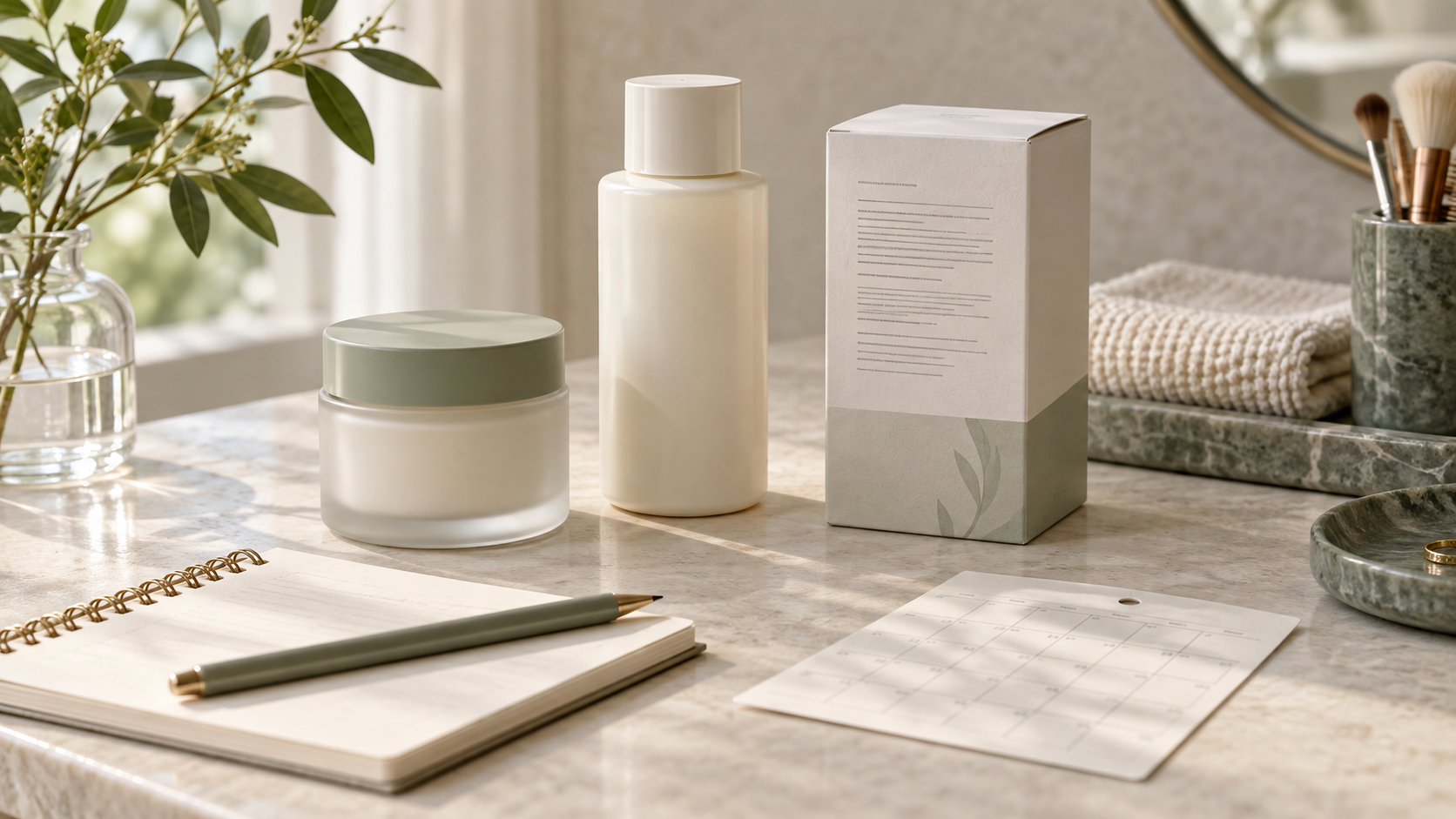
A K-beauty jar can have several markings that look like dates. Before putting it into your routine, make a small record of what the package actually says: the printed date, any period-after-opening symbol, and the day you opened it. These answer different questions. A reminder in your calendar should preserve that information, not turn an uncertain marking into a promise that the product is safe.
This guide is for organizing the ordinary cosmetic products you already own. It does not assign a lifespan to a particular formula. For a Korean brand sold in different countries, start with the exact package you received and its manufacturer instructions; another market's photo may show different information.
What the three fields tell you
| Field | What to record | What to avoid assuming |
|---|---|---|
| Printed date and its label | The full date, surrounding words and any symbol | That every date is an expiration date |
| Period after opening, or PAO | The open-jar symbol and its stated period, if present | That it starts on the purchase date |
| Your opening date | The actual day you first opened the product | That a guessed date is a reliable starting point |
Ireland's Health Products Regulatory Authority describes PAO as the period after opening during which a cosmetic is considered fit for use. Its explanation of EU labelling uses an open-jar symbol with a period in months or years. In that framework, a product whose minimum durability exceeds 30 months requires a PAO symbol. This is EU labelling guidance, not a claim that every Korean or US package follows the same rule. HPRA's label guide explains that context.
The US FDA says ordinary cosmetics are not required by US law to carry a specific shelf life or expiration date, while manufacturers remain responsible for safety. So a missing printed expiration date on a US-market cosmetic does not give you a replacement deadline to invent. The FDA's shelf-life explanation also describes how storage and use affect products.
Make a record before the carton disappears
Set the unopened product and its carton together. Photograph the relevant information for your own reference, including the bottom of the container if there are markings there. Keep the carton until you have resolved anything unclear. This is particularly useful when a retailer listing uses a different size or a package design that does not match yours.
Use five lines in a notebook or private note:
- Product identity: exact name, size and market or seller.
- Package wording: printed date, its surrounding label, and PAO if present.
- Opening date: an actual date, or “not yet opened.”
- Manufacturer directions: relevant storage or use instructions from this package.
- Unresolved question: anything you cannot confidently identify.
Preserve the original wording before interpreting it. A string such as 06/09/27 is not enough, by itself, to establish either the date format or what the date describes. If the package does not make that clear, ask the manufacturer with a photo instead of silently choosing your preferred interpretation.
Turn a stated period into a reminder, not a guarantee
Here is a hypothetical record, not advice for a real cosmetic: suppose a package shows a 6M PAO and you open it on September 1. A six-month calendar reminder would fall on March 1 of the following year. Label the reminder “Review the package's after-opening period,” and keep the original label information attached.
Do not use that example to assign six months to an unmarked product, extend an earlier manufacturer deadline, or override storage instructions. FDA guidance explains that heat, moisture, air and contamination can affect cosmetics. A calendar calculation cannot establish how a particular container has been handled or whether it remains suitable.
If you do not remember the opening date, record “unknown.” The purchase confirmation can establish when you bought it, but it cannot establish when you opened it. Asking the manufacturer about the specific situation is more useful than filling the gap with an invented date.
Keep a batch code in its own field
A batch or reference identifier helps identify the product's production batch; HPRA lists it separately from durability information. Do not relabel an unexplained code as an expiration date. Save it as written and include it when contacting the brand.
You can adapt this original message:
“I have [exact product and size], purchased from [seller] for the [country] market. The package shows [literal marking] and the batch code is [code]. I opened it on [date, or unknown]. Could you confirm what this marking means and which storage and after-opening instructions apply? I can provide photos of the container and carton.”
Send that question through the brand's official support channel. A reply about the exact package is more relevant than a third-party code calculator that does not explain its source or the product version it covers.
Keep the record useful when your routine changes
If you pause a product, note that you paused it without resetting its opening date. If you buy a replacement, create a new entry rather than changing the old container's record. This keeps two similar jars from sharing one misleading history.
Follow the product's storage instructions. FDA's general guidance includes keeping containers and applicators clean, avoiding sharing makeup, and avoiding excessive heat such as a hot car. These habits do not establish a new expiry date or validate a questionable container.
This article's ordinary-cosmetic framework is not a substitute for drug labelling. In the United States, FDA classifies sunscreens and acne treatments as drugs, sometimes also as cosmetics; their requirements differ. Use the instructions for the actual product category rather than transferring a skincare-notebook example to it.
Your finished record should leave you with fewer guesses: one identified package, its literal markings, one honest opening-date entry and a clear question where information is missing. That is the purpose of the notebook—not a homemade safety certificate.
References
- US Food and Drug Administration — Shelf Life and Expiration Dating of Cosmetics. Read September 20, 2026. Supports the US ordinary-cosmetic labelling distinction, effects of use and storage, general handling guidance, and separate treatment of products that are drugs.
- Health Products Regulatory Authority — Cosmetic products labelling. Read September 20, 2026. Supports the EU-context distinction between minimum durability, PAO and batch identification. The five-line record, hypothetical calendar example and support-message template are KoreanESY's original editorial tools, not product tests or regulator-prescribed templates.
Keep going
Ready for a guided next step?
The learning path walks you through the key ideas, one comfortable step at a time.