When K-Beauty Packaging Tells a Korean City Story
By Korean ESY · Editorial standards
October 9, 2026
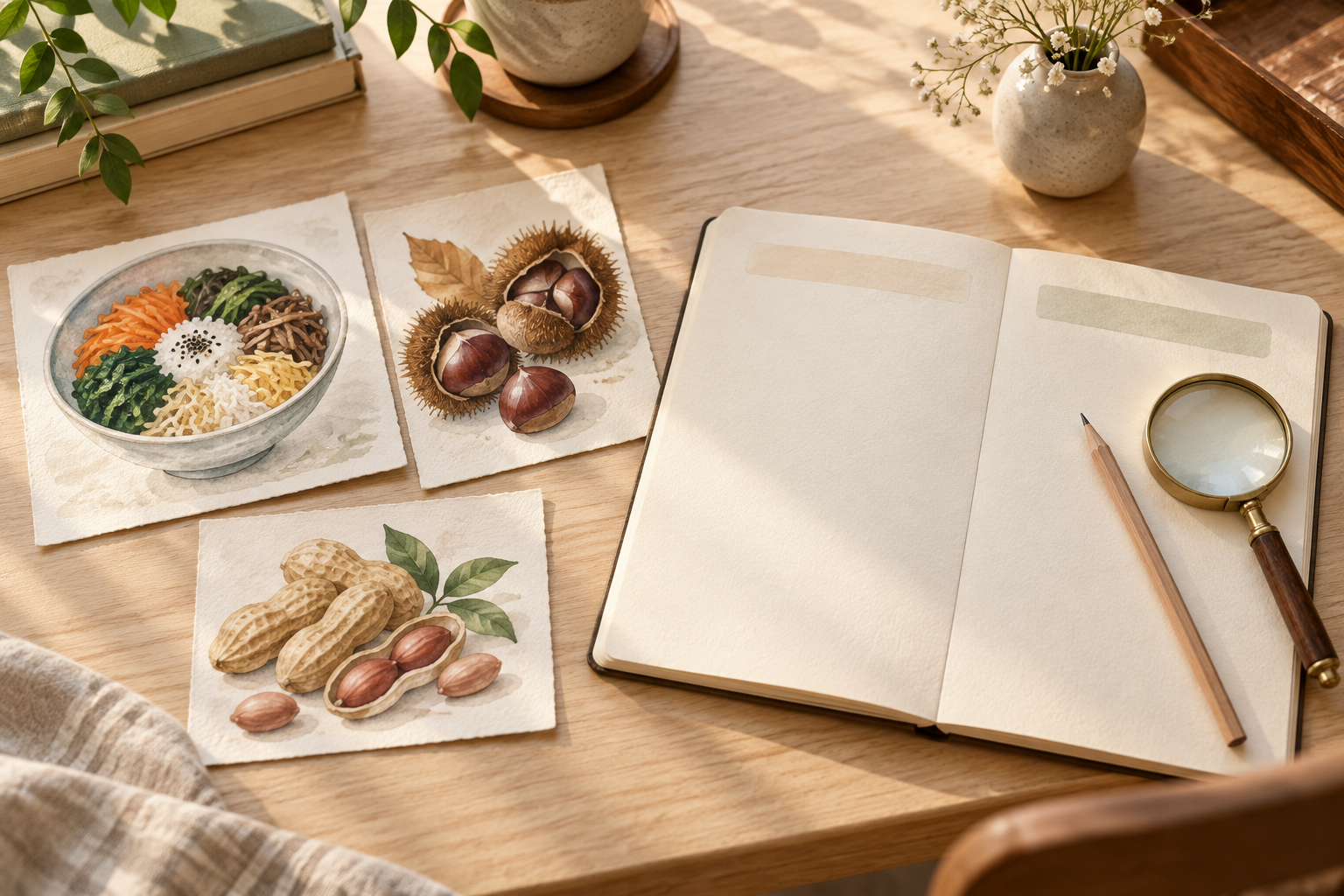
A familiar character on a cosmetic box can be a starting point for learning about Korea. The useful question is not simply “Which character is this?” Ask which place, food or cultural detail the design is pointing toward—and keep that story separate from what you know about the product inside.
Olive Young’s City Log campaign offers a dated example. Its August 24, 2026 announcement described Sanrio character designs connected to Korean destinations. The announced campaign ran from August 30 through September 30, 2026. That period has ended. This is a guide to interpreting the design idea, not an announcement of a current promotion or a recommendation to buy remaining stock.
By the end, you can make a short two-column note: one side records the cultural reference; the other records product facts that still need checking. You do not need to buy anything to use it.
Three place-and-food connections to notice
The announcement connected its regional designs with examples including Jeonju bibimbap, Gongju chestnuts and Udo peanuts. These are useful search and reading leads. They are not evidence that every collaborating cosmetic contains those foods or ingredients.
| Reference named in the announcement | A useful question about the design | What it does not establish |
|---|---|---|
| Jeonju and bibimbap | How does the design make a place recognisable through food? | That a cosmetic contains a bibimbap ingredient or reproduces a regional recipe |
| Gongju and chestnuts | Is the food motif carrying the regional story? | That the formula contains chestnut or has a particular skin benefit |
| Udo and peanuts | What part of the illustration connects the character with the destination? | Whether a product contains peanut, is allergen-free or suits an individual |
These questions are our own reading exercise. The named connections come from the official campaign description; we have not inspected every individual product package. If a package is too small to read or its exact edition is unclear, write “not checked” instead of filling the gap from a promotional image.
The announcement also described a hanbok-wearing Hello Kitty among the Korean-themed designs. A clothing reference and a food reference can both tell a place-based story, but they are different kinds of evidence. Record what the official description actually identifies rather than treating every decorative detail as a symbol with a fixed national meaning.
A character is the entry point; the local detail is the next question
Our interpretation of this campaign is that a recognisable character gives readers a familiar starting point, while a named regional detail offers somewhere more specific to explore. That is an interpretation of the design approach, not a measurement of its effect on shoppers.
Try a three-line description:
- Character: identify the character only if the official description supports the name.
- Local reference: record the place, food or clothing detail identified by the source.
- Next question: choose one thing you would like to learn about that place beyond the package.
For the Jeonju example, a useful next question is how a food becomes associated with a place. It is a different question from whether a particular cream is suitable for your skin. Keeping those questions separate lets you enjoy the visual story without turning the story into a product claim.
The announcement described these designs across products, merchandise and store displays. This article does not reproduce the campaign’s artwork. Nor does the announcement give this site permission to reuse or modify those images merely because they are publicly visible.
Keep a separate product-facts column
A cultural reference can be clear even when the exact product is not. If you later compare a character edition with an ordinary edition, start a second note using the exact official listings and readable labels for both.
| Field to record | Why it belongs in the product column |
|---|---|
| Full product and edition name | A character or campaign name alone does not identify the cosmetic |
| Net quantity and number of units | A single container and a gift set are different comparisons |
| Included extras | Record a pouch or other accessory separately from the amount of cosmetic |
| Ingredient information shown for each edition | Do not infer a formula match from a similar box, or an ingredient from a food illustration |
| Seller, market and date checked | A past campaign announcement does not establish current availability |
| Price, if actually visible for that exact offer | Compare like quantities and contents; leave missing prices unknown |
This is a recordkeeping method, not a claim that we have verified two comparable products. We have not established an exact matched pair for this article. There is consequently no “same formula” verdict, price-premium calculation, product ranking or skin-performance conclusion here.
If the two listings do not provide enough detail, the most useful result may be a question for the brand: “Are these the same product and quantity, and what differs in this edition?” Keep its answer with the exact edition and date. Do not translate “limited edition” into a claim that a formula is stronger or more effective.
A worked note, without an invented shopping test
Here is an example using only the campaign-level facts above. It is an editorial demonstration, not a report from a store visit or a product trial.
Cultural-story note: “Olive Young’s August 24 announcement names Jeonju bibimbap as a regional reference in City Log. I want to learn how that food connection is represented in the design.”
Product-facts note: “No exact product pair checked. Quantity, ingredient match, present price and stock are unknown. The announced campaign ended September 30.”
Next step: “Read about the named regional reference. Only start a buying comparison if exact current product information is available.”
Notice that the first note is still useful when the second contains unknowns. Learning about a design does not require pretending that you have compared or used the product.
Your five-minute packaging reading card
Use these prompts with an official campaign description or a package you already own:
- What is the exact source, and when was it published?
- Which character and local reference does that source explicitly name?
- Is the campaign current, planned or already over?
- Which details are my interpretation rather than the source’s statement?
- What do I still need before making any product comparison?
Finish with one sentence about the cultural story and one sentence about the remaining unknowns. For example: “The campaign links a character design with a named Korean food and destination. I have not verified the cosmetic’s formula, price or availability.”
That distinction makes the note reusable. You can return to it when a new collaboration appears without carrying an old promotion’s dates or an unrelated product’s details into the next comparison.
References
- Olive Young corporate newsroom: City Log regional character collaboration announcement, published August 24, 2026; original body checked October 7, 2026. Supports the announced August 30–September 30 campaign period, named regional design examples and described placement across products, merchandise and stores. It does not verify current stock, exact product pairs, ingredients, efficacy or image reuse rights. The two-column worksheet and worked note are KoreanESY’s original editorial analysis.
Keep going
Ready for a guided next step?
The learning path walks you through the key ideas, one comfortable step at a time.