Hotteok for Four: A Small-Batch Guide to Filled Korean Pancakes
By Korean ESY · Editorial standards
October 3, 2026
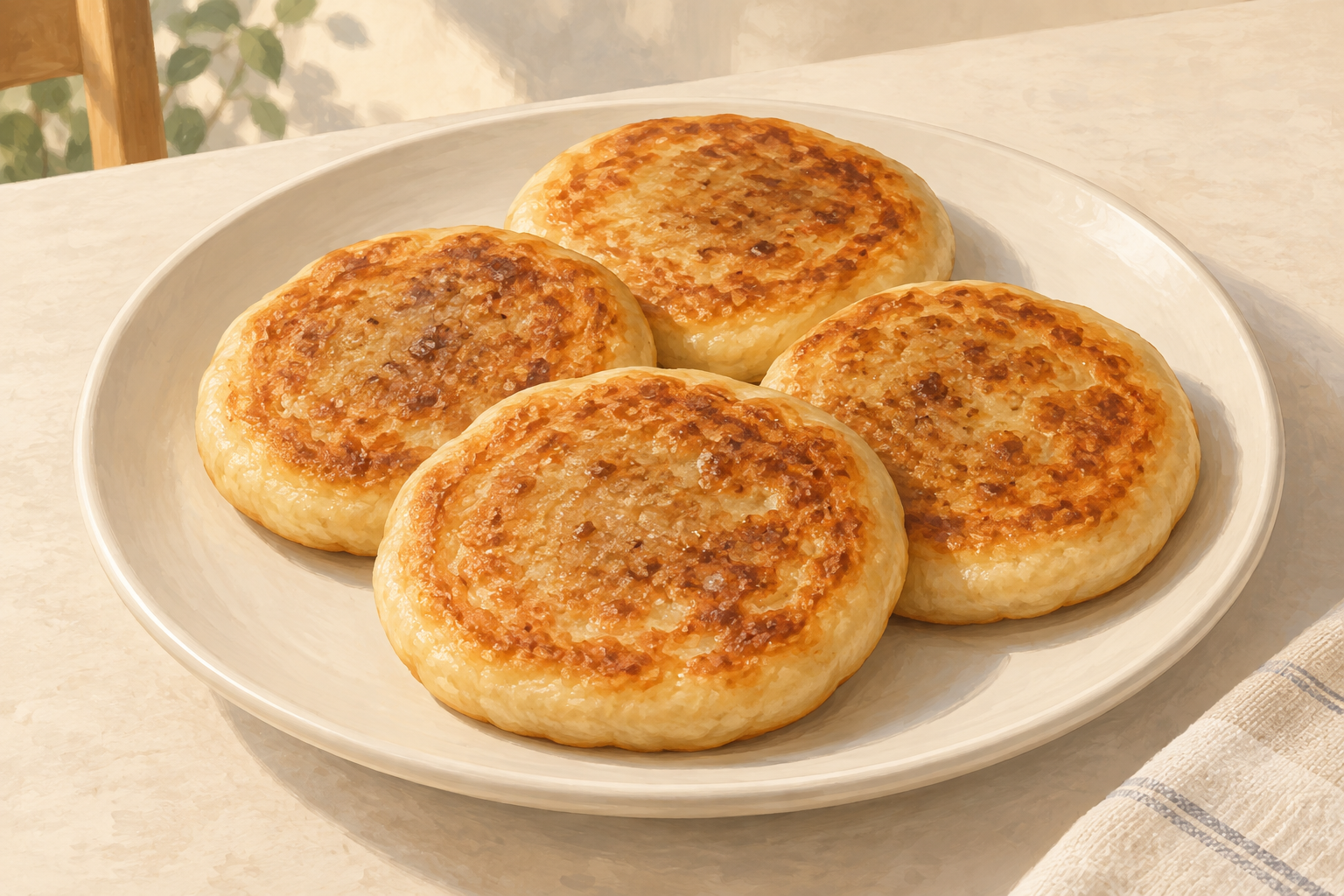
Hotteok (호떡) is a filled Korean pancake: a yeast dough wrapper holds a sweet brown-sugar filling, and the sealed round is flattened in a pan. This version uses cinnamon and chopped walnuts. The useful beginner skill is sealing the filling inside before pressing, so that sugar stays inside the pancake rather than burning in the pan.
Netflix's December 5, 2025 KPop Demon Hunters food guide includes hotteok. That is our dated cultural connection, not evidence that this dish is newly viral in October 2026. This four-piece adaptation draws on Maangchi's eight-piece recipe. KoreanESY has not kitchen-tested the smaller batch; quantities and timings below are a source-based adaptation, with visual cues to help explain the method. The images are AI-generated illustrations, not photographs of a cooking test.
Recipe
Planned yield: four pancakes, one per serving. Skill: beginner with careful filling and sealing. Spice: cinnamon, no chile. Equipment: mixing bowl and cover, measuring spoons, a board, nonstick frying pan with lid, broad spatula and a food thermometer.
Estimated time: 25 minutes of mixing and shaping, about 70–80 minutes of rising, and 10–15 minutes for cooking in batches, plus time for the filling to cool before eating. Allow about two hours; a cool room can make the rise longer. These are planning estimates, not measured test results. Prepare the filling during the first rise.
In this recipe, one tablespoon means 15 mL and one teaspoon means 5 mL. Dry weights are ingredient-specific approximations, not mL-to-gram substitutions.
| Ingredient | Four-piece quantity | Purpose |
|---|---|---|
| All-purpose flour | 120 g, about 1 cup | Dough; measure separately from board flour |
| Water | ½ US cup, approximately 118 mL | Dough liquid; warm to 100–110°F for the chosen active dry yeast |
| Granulated sugar | About 12 g, 1 tablespoon | Dough |
| Active dry yeast | 1 level teaspoon (5 mL by volume) | Use active dry; do not silently replace with RapidRise or pizza yeast |
| Diamond Crystal kosher salt | About 0.67 g, ¼ teaspoon | Dough; this volume is brand-specific |
| Neutral vegetable oil | 7.5 mL, ½ tablespoon | Dough |
| All-purpose flour for the board | Up to 30 g, ¼ cup available | Use only enough to handle the dough; unused flour is not consumed |
| Packed brown sugar | About 53 g, ¼ cup | Filling |
| Ground cinnamon | ½ level teaspoon (2.5 mL by volume) | Filling |
| Finely chopped walnuts | About 7 g, 1 tablespoon | Filling |
| Neutral vegetable oil for the pan | 15 mL, 1 tablespoon budgeted separately | Thin pan coating across batches; not a deep-frying bath |
Do not use ¼ teaspoon of a different salt and assume the same mass. This version specifies Diamond Crystal; keep that brand-specific salt measure. The pan-oil allowance is an editorial allowance; actual absorption is unknown.
1. Mix and let the dough rise
Use active dry yeast as directed on its package. Fleischmann's specifies blooming it in warm liquid at 100–110°F (approximately 38–43°C). Stir the measured yeast into the 118 mL warm water until dissolved, then stir in the measured sugar. This uses the recipe water; do not add a second portion of water for dissolving. Add the dough oil and salt, then incorporate the 120 g flour until there are no dry patches. Cover and let rise until roughly doubled; the source method allows about an hour, but volume matters more than the clock. Do not add the board flour to this bowl.
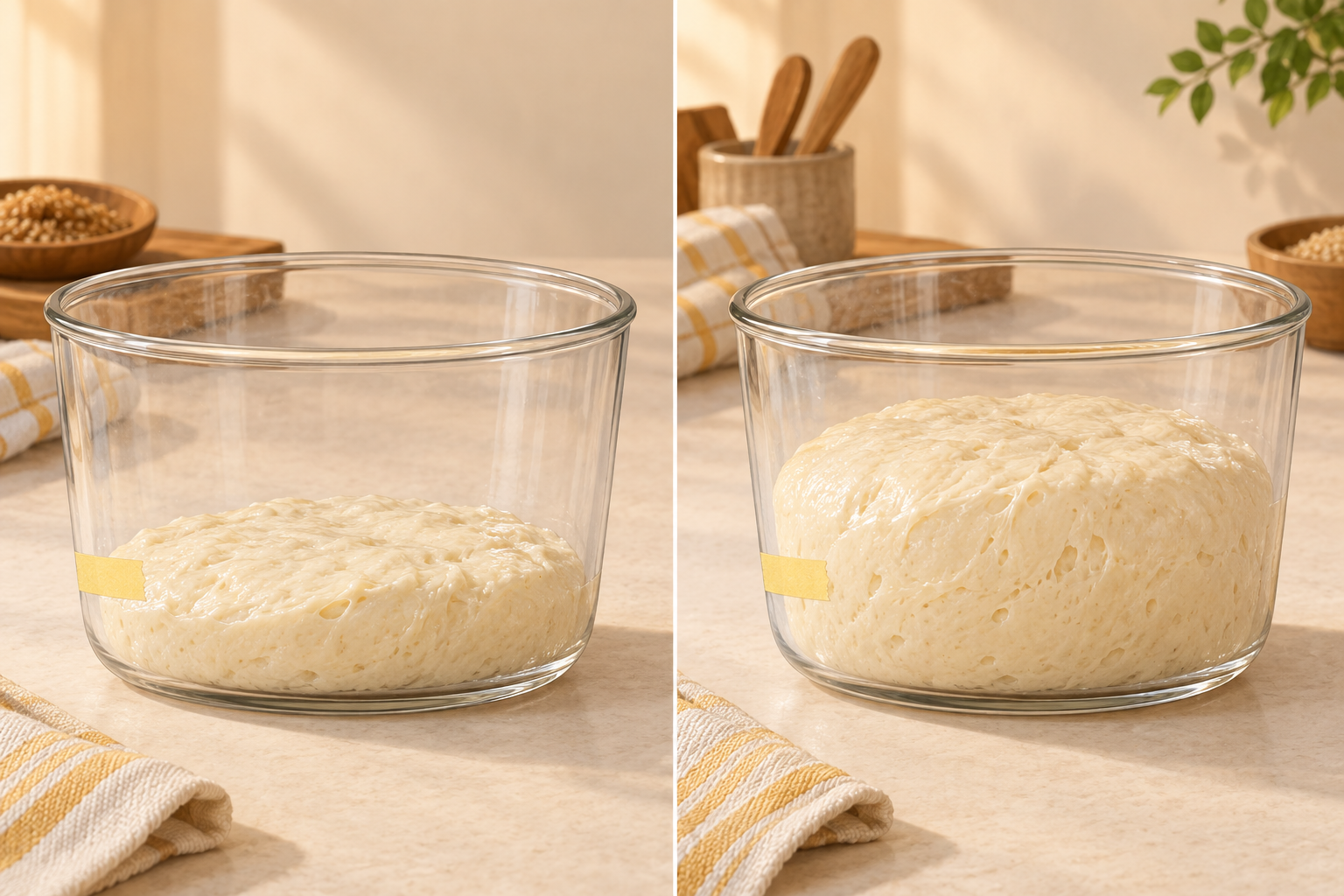
Gently deflate the dough and let it rest covered for another 10–20 minutes, following the source method. Meanwhile mix all the brown sugar, cinnamon and finely chopped walnuts in a separate bowl.
2. Divide, fill and seal
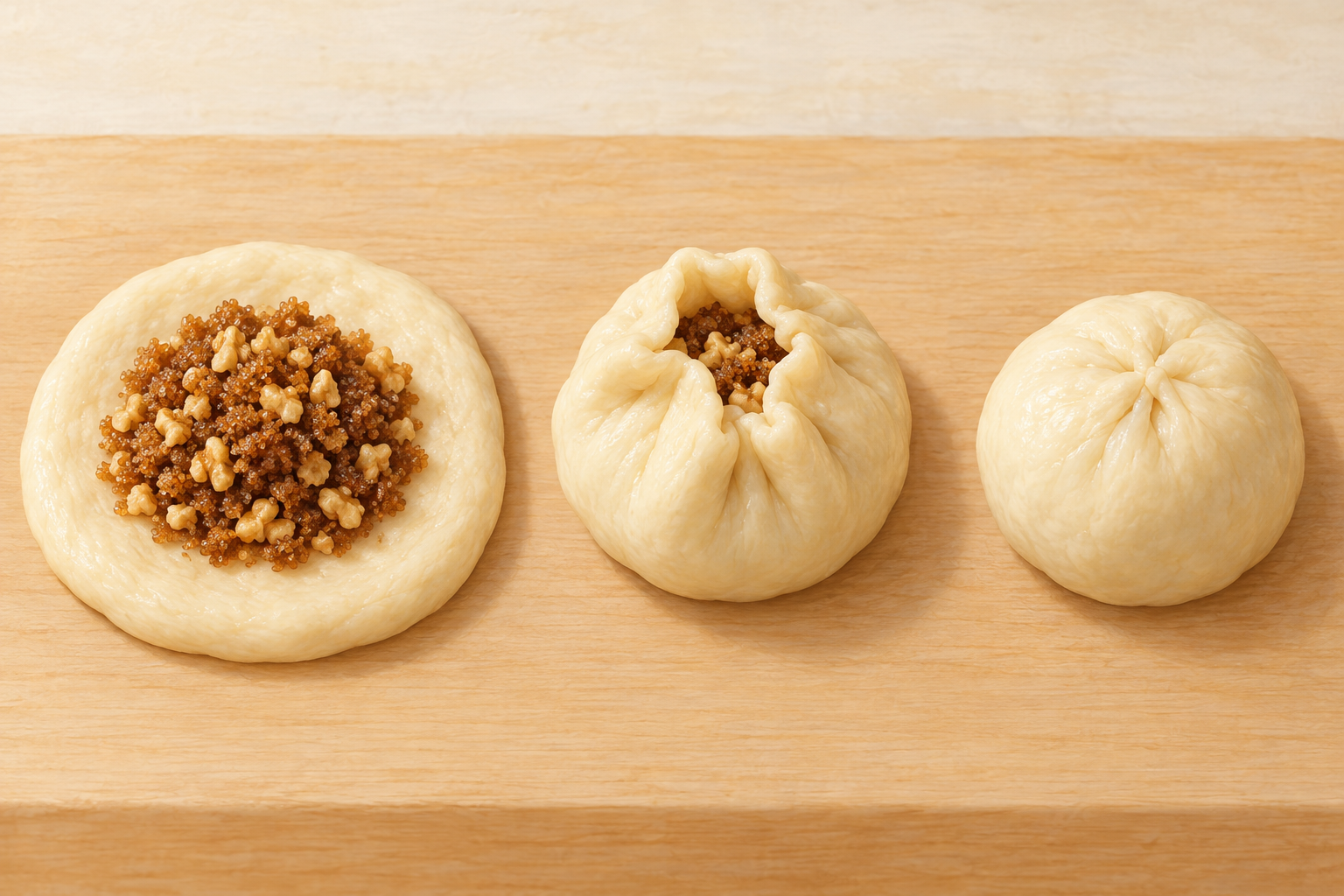
Lightly dust the board from the separate flour allowance. Divide the dough into four equal pieces and divide the filling into four portions. Flatten one dough piece into a thick round, place one portion of filling in its center, bring the edges together and pinch them completely closed. Keep sugar off the edges so they can stick together. Repeat with the other pieces. Never place an open pouch in the pan.
3. Start gently, flip, then press
Heat the nonstick pan over medium heat and coat it lightly using the measured pan oil. Work in batches with room to turn each pancake. Put a sealed round in the pan and cook until its underside is pale golden; the source timing starts around 30 seconds. Flip, then press gently with the broad spatula into an even round. Do not press so hard that the seam splits.
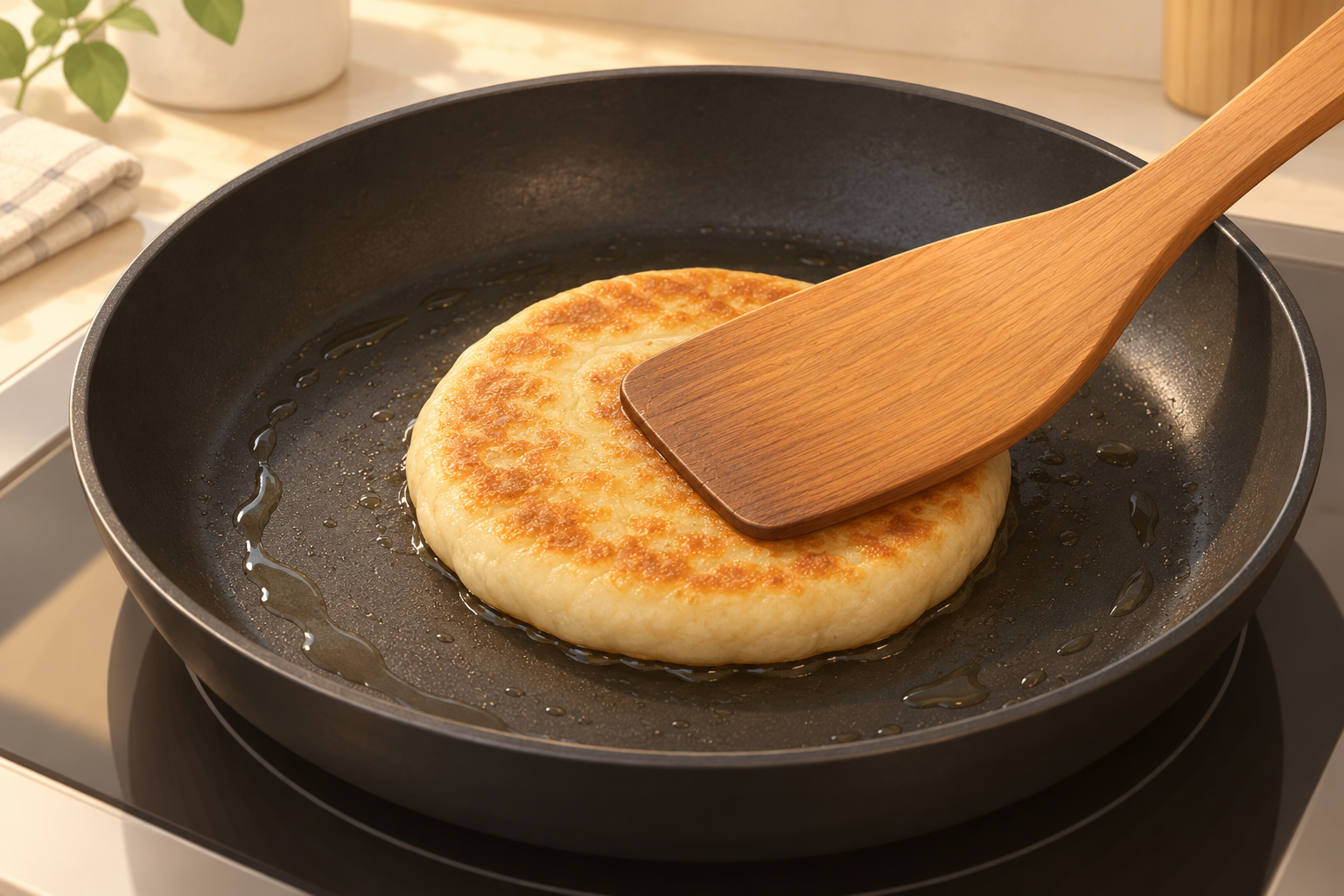
Cook until the second side is golden, around a minute in the source method. Adjust the heat if the surface darkens before the dough can cook through. The total oil allowance covers all batches; do not add a tablespoon for every pancake.
4. Finish covered, then let the filling cool
Turn again, lower the heat to very low and cover for about a minute, following the source's finishing step. Both surfaces should be golden, and the wrapper should be cooked through rather than wet and doughy. If the wrapper is still raw, continue gently; a brown exterior alone does not prove the center is ready.
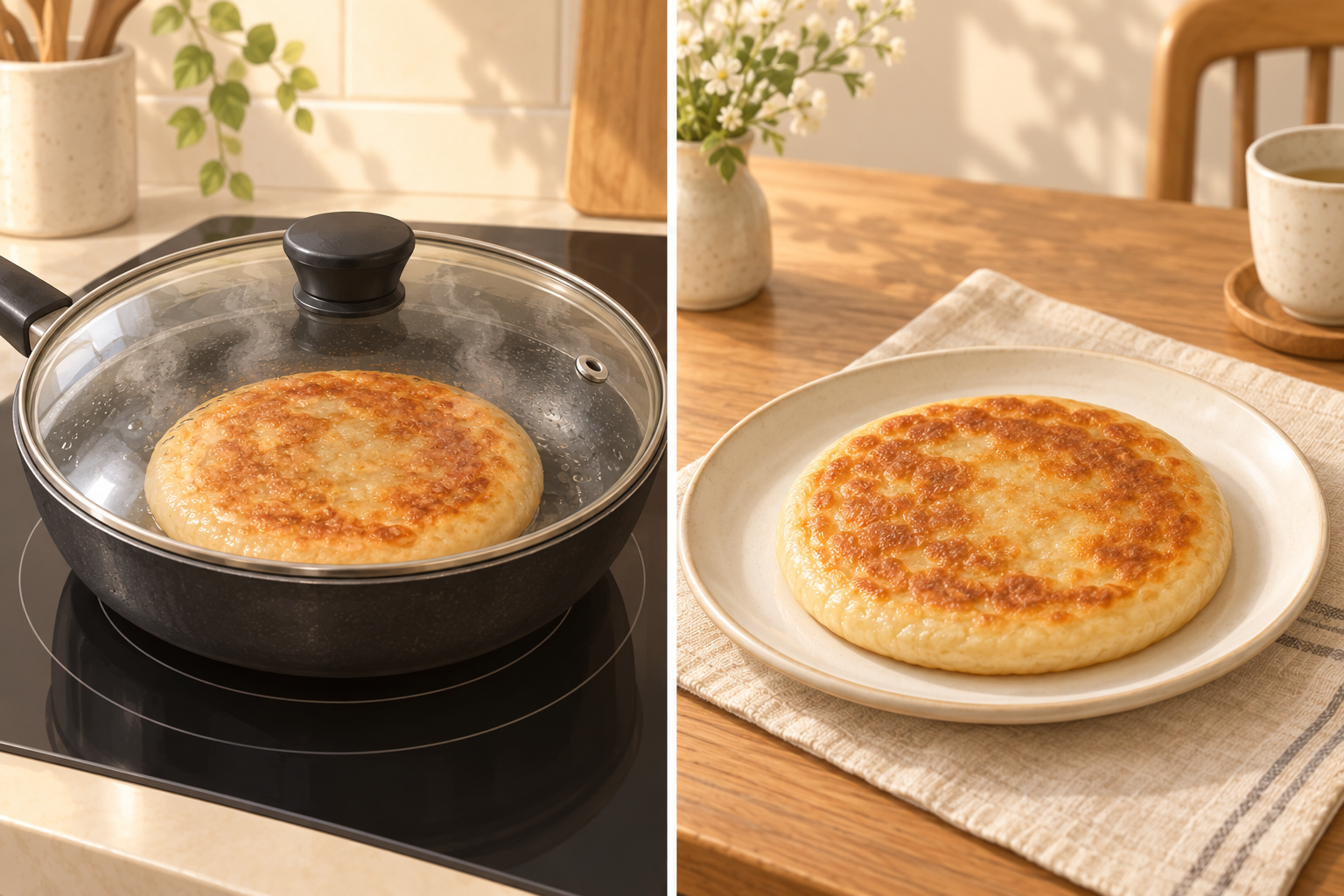
Move to a plate with the spatula. Melted sugar can burn even after the outside feels cooler. Let the filling cool before taking a bite; do not give someone a pancake straight from the pan as though it were ready to eat immediately.
Mistakes worth preventing
Filling leaks: seal the edges before frying and press gently. If a pancake splits, stop pressing. Let the pan cool before cleaning away burnt sugar; do not touch molten filling.
Dark outside, doughy inside: reduce heat and use the covered finishing step. A clock cannot compensate for an overheated pan or an unusually thick pancake.
Dough has not risen: check the yeast type and package instructions, and allow more time in a cool room. Do not compensate by cooking an unrisen lump on higher heat.
Dough sticks to everything: use the separate board flour sparingly. Dumping all 30 g into the dough changes the recipe and can make sealing harder.
This version contains wheat and walnuts (a tree nut). Check every ingredient label and shared-equipment warnings. A different filling or gluten-free flour would be a separate adaptation, not a tested one-for-one substitute. Do not describe a substitution as allergy-safe without checking its ingredients and handling.
US shopping and cost worksheet
The basic shopping words are 밀가루 (flour), 흑설탕 (brown sugar), 계피 (cinnamon) and 호두 (walnuts). For this from-scratch method, buy all-purpose flour and the specified active dry yeast; a commercial hotteok mix has its own formula and directions.
Keep three costs separate: the full packs needed on a first shopping trip, the portions used for this batch, and the used cost divided by four. Unused flour for dusting and unabsorbed oil are not a measured nutrition or cost result. Tax, delivery fees and tips belong outside an ingredient subtotal.
On October 2, 2026, Target's US online pages displayed the two products below. No store or ZIP was selected. These are displayed USD prices, not an LA shelf quote or a delivery promise; no sale label was observed for these items.
| Product and official retailer link | Pack | Displayed full-pack price | Portion for this recipe |
|---|---|---|---|
| King Arthur Unbleached All-Purpose Flour | 5 lb (about 2,268 g) | $6.29 | 120 g dough flour, plus up to 30 g available for dusting |
| Fleischmann's Active Dry Yeast | 4 oz jar | $6.29 | 1 level teaspoon; portion cost not calculated from an unverified teaspoon weight |
| Granulated sugar, packed brown sugar, Diamond Crystal kosher salt, neutral vegetable oil, ground cinnamon and walnuts | Pack sizes and prices not verified | Unknown | See ingredient table; count oil only once across both uses |
The two displayed packs cost $12.58 together, excluding all other ingredients. Flour allocated to the dough costs about $0.33: $6.29 × 120 ÷ 2,267.96. If all 30 g of the separate dusting allowance is also used, the flour allocation is about $0.42. That is about $0.08–$0.10 of flour per pancake, calculated from unrounded values. The range reflects a stated dusting-flour allowance, not observed cooking results. A cashier sells the full bag, not this fraction.
Complete shopping basket, total recipe-used cost and total per-serving cost: unknown. Yeast portion cost and the six other purchased ingredients are not included in the flour calculation. Pantry ingredients are not free; taxes, delivery and tips are excluded. Weigh any dusting flour left over if you want your own used-cost record.
For an LA example, H Mart LA Madang lists 621 S Western Ave, Los Angeles, CA 90005, checked October 2. That confirms a location, not either product's local stock or price. US readers can use ordinary supermarket baking aisles for flour, sugars and active dry yeast; use the H Mart store finder when comparing nearby Korean groceries. Availability and delivery depend on your location.
Buy plain all-purpose flour, not self-rising flour or a hotteok premix. Look in the spice aisle for ground cinnamon and the baking or nut aisle for plain walnuts, then chop them finely. Choose granulated white sugar for the dough and packed brown sugar for the filling. A neutral oil such as canola is a same-volume pan option; check its own label. For a first batch, compare the cost and waste of a small yeast pack with a jar. Follow the manufacturer's storage directions after opening. Do not substitute instant yeast while keeping these two-rise instructions unchanged.
Raw flour is not ready to eat. Do not taste the uncooked dough; wash hands, utensils and surfaces after handling it. Cook the wrapper through.
For a little language practice alongside the snack, try our original Korean question-and-answer exercise. It includes a food-naming example; it is not a cooking source.
Leftovers
For a conservative home-storage approach, follow USDA's general leftovers guidance: refrigerate promptly within two hours (within one hour above 90°F), using shallow containers and a refrigerator at 40°F or below. Keep refrigerated leftovers for no more than three to four days and reheat leftovers to 165°F as measured with a food thermometer. These are general leftovers limits, not a shelf-life test of this hotteok adaptation. Let the sugar filling cool enough to eat safely after reheating, too.
References
- Maangchi: Hotteok — source eight-piece method; read September 29, 2026. Four-piece adaptation and explanations by KoreanESY; source photographs not reused.
- Netflix Tudum: KPop Demon Hunters food guide — December 5, 2025 cultural context; read September 27, 2026. Not current social trend verification.
- King Arthur Baking: Ingredient Weight Chart — ingredient-specific working conversions; read October 1, 2026. Does not validate the scaled recipe.
- Fleischmann's: Baking Yeast — active dry yeast liquid temperature, blooming and two-rise distinction; read October 2, 2026.
-
USDA FSIS: Leftovers and Food Safety — general refrigeration and reheating guidance; read October 2, 2026.
-
Target: King Arthur all-purpose flour, 5 lb and Target: Fleischmann's Active Dry Yeast, 4 oz — displayed pack/price observations and flour handling warning, checked October 2, 2026. Local stock and checkout cost unverified.
- H Mart LA Madang — store address checked October 2, 2026; no product-stock claim.
- Fleischmann's FAQ — active dry yeast must dissolve in warm liquid; checked October 2, 2026.
Keep going
Ready for a guided next step?
The learning path walks you through the key ideas, one comfortable step at a time.